
Until Tombstone, Western films have never paid attention to
the tack they used. We found out that using originals they
just don't hold up to the riggers of movie work so we utilized
the talents of the Buckaroos to create traditional style
saddles which will last a lifetime ... Peter Sherayko
the tack they used. We found out that using originals they
just don't hold up to the riggers of movie work so we utilized
the talents of the Buckaroos to create traditional style
saddles which will last a lifetime ... Peter Sherayko
| The Motherhubbard |
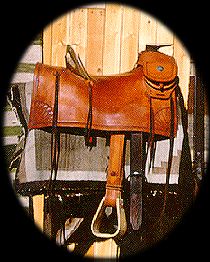
| This saddle was used from the 1840's to the turn of the century, very popular from the mountain men to Indian Scouts. Buffalo Bill is depicted as using one in Charlie Russells famous painting "Buffalo Bills Duel With Yellowhand" |
| The Texas Hope |
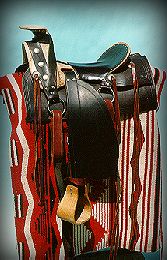
| The Texas Hope saddle used during the Civil War and the first of the trail driving saddles and made famous by the Texas Rangers notably Capt McNellys rangers in the mid 1870's |
| The Denver or Cheyenne |
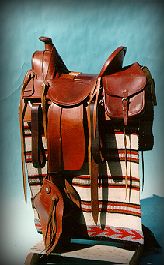
| The classic of the old west the Denver or Cheyenne saddle, Sam Stagg rig halfseat. This was the standard of the 1880's. |
| The Plantation Saddle |
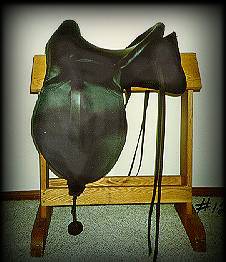
| A one of a kind treat for the saddle, movie or Tombstone collector. This plantation saddle circa 1870’s with swivel stirrups was the one used by Wyatt Earp in Tombstone and can be seen clearly when he meets Josephine. Our saddler on Tombstone is offering it for sale through us. It comes with two letters of authenticity and a script of Tombstone. |
| Cowboy Bridles |
| Most bridles of the cowboy period of the 70's and 80's were relatively plain affairs .. our standard plain bridle with throat latch. Our bits and headstalls are recreated fro original style, no stainless steel for our bits, but iron, brass, bronze and silver. |
Call Caravan West at 661-268-8300 |
Our head wrangler has been schooling movie horses for over 25 years. They
are stone broke so that even a "quarter horse" actor can sit them and look
like they know what they're doing. (A quarter horse rider is one who is
capable of riding the horses outside a grocery store for a quarter. When
our head wrangler is not working on a film, he guides hunters and neophyte
horsemen into the Rocky Mountains.
are stone broke so that even a "quarter horse" actor can sit them and look
like they know what they're doing. (A quarter horse rider is one who is
capable of riding the horses outside a grocery store for a quarter. When
our head wrangler is not working on a film, he guides hunters and neophyte
horsemen into the Rocky Mountains.
Assistant wranglers are professional bull riders, horse trainers and trail
riders -- people so comfortable on a horse they are wedded groin to back
and thereby make any actor, no matter what his skill level, comfortable,
secure and confident.
riders -- people so comfortable on a horse they are wedded groin to back
and thereby make any actor, no matter what his skill level, comfortable,
secure and confident.
We also have a full load of wagons: buckboard, stage coach, covered,
medicine show, surry, buggy and chuck.
medicine show, surry, buggy and chuck.
| Rolling Stock |
| Wranglers |
| SADDLES |
| We have over 150 saddles including 25 McClellans, both Civil and Indian War, the 59 and 72 models, with appropriate bridles, bits, saddle bags, carbine thimbles, boots and blankets. |
Other types of saddles are English and plantation used from the Revolutionary War on, mountain men
saddles, 1820 California mission, Mexican saddles, 4 different styles of pack saddles with packs and gear,
approximately 20 modern (20th Century) western saddles and 30 original period saddles from 1860 to
1900, and our piece de resistance,about 60 new made but period correct saddles. We challenge any other
outfit to match our quality or quantity. These are made on quarter horse bar trees so they fit today's
larger, more robust horses. Included are 1850s Texas Hope, 1860 pony express, late 60s, 70s, 80s and
90s half seat, loop seat or full seat, Sam Stag rigged, square skirts including Denver Plains and California
style and Mother Hubbard.
saddles, 1820 California mission, Mexican saddles, 4 different styles of pack saddles with packs and gear,
approximately 20 modern (20th Century) western saddles and 30 original period saddles from 1860 to
1900, and our piece de resistance,about 60 new made but period correct saddles. We challenge any other
outfit to match our quality or quantity. These are made on quarter horse bar trees so they fit today's
larger, more robust horses. Included are 1850s Texas Hope, 1860 pony express, late 60s, 70s, 80s and
90s half seat, loop seat or full seat, Sam Stag rigged, square skirts including Denver Plains and California
style and Mother Hubbard.
| Miscellaneous Tack |
*We have them, but we don't recommend breast collars. They didn't come
in until the 90s and were not popular until the 20th Century.
* We have full body fly nets (a catalog from 1880 shows them). Plain wool
saddles blankets and colorful Navajo style, a blanket much sought after in
the Old West as it is today.
* Saddle pockets - back then, they were called pockets, they were small
and carried just enough equipment, unlike the suitcases we've seen in some
westerns. Ours are new and made from originals. We also carry pommel
bags, popular during the Civil War and just after.
in until the 90s and were not popular until the 20th Century.
* We have full body fly nets (a catalog from 1880 shows them). Plain wool
saddles blankets and colorful Navajo style, a blanket much sought after in
the Old West as it is today.
* Saddle pockets - back then, they were called pockets, they were small
and carried just enough equipment, unlike the suitcases we've seen in some
westerns. Ours are new and made from originals. We also carry pommel
bags, popular during the Civil War and just after.
Other horse equipment are: grass ropes and rawhide riatas, quirts, whips
from bull to buggy, canteens (mostly small but some giant), and cleaning
supplies - brushes, curry combs and hoof picks, all made in the 19th Century
style.
from bull to buggy, canteens (mostly small but some giant), and cleaning
supplies - brushes, curry combs and hoof picks, all made in the 19th Century
style.
| We also use 19th Century women's side saddles, some antique or newly made, with stunt women who can double or teach actresses how to properly ride a side saddle. |
